Showing posts with label #rgdDT. Show all posts

DesignThinkers 2016, Day 2


Jake Barton
Local Projects - museum/exhibit design (Smithsonian, 9/11 Museum)
“The Future of Virtual is Physical”

“virtual reality” is now much more than just masks on our face
poetry of experience

“genius is 1% inspiration, 99% persiration (attributed to Edison)
talent = person who has done his/her homework

projects discussed:

1) 9/11 Museum
stories projected on top of artefacts
a collection of memories (vs. just telling)
a container for stories
a communal space for NYC
“We Remember” gallery - global memories of the morning of 9/11/01
risk of allowing people to write their own messages - what would happen? 
lesson: trust your visitors - they will rise to the occasion and lift everyone up with them
inverted pools with inscribed names - randomness of order + meaningful adjacencies
creating a “latticework of human meaning”

2) Cleveland Museum of Art
platform used for patrons own expression
visitor placed at the centre of expression
social, performative

3) BioDesign Studio - DNA museum
can create competing organisms
people learn by doing

-communal experience - combined heart beats

museums should be
-“a friend you want to spend time with” - more social / a shared experience

interactive devices for kids to measure physics on the playground
playgrounds = physics machines
“technolgy that requires a friend”
extracting math and science out of experience

7) Let Go (Cooper-Hewitt Smithsonian)
interactive pen allows patrons to collection inspiration
pattern design - patrons able to export and buy via zazzle

fully immersive


Eddie Opara
“Design in Retrograde?”

industry is “under siege” from inside out
design must be stimulus for creative thinking, and must outlast critics
ie. initial criticism of Eiffel Tower faded over time
designs should be allowed to breathe (ie. Met rebrand, which was attacked immediately)
Brand New = Fox News of design world
need for better education - reading, writing, better dialogue
lobbying is dangerous if left unchecked (ie. petitions)
Quinnipac university - change.org and Fox News coverage
stop the retrograde

*create the change you want to see


“Dark Patterns & Business Models: “I Can’t Let You Do That, Dave.”

discussion of DMCA (Copyright act) and DRM (digital rights management)
lawsuits with HP, Sega, Skylink, Lexmark, Netflix, Sony BMG

we’ve entered uncharted territory with copyright, it’s legally terrifying
“software is eating the world”
huge implications for security landscape

cell phones = “pocket distraction rectangle”

DOSAs (Denial of service attack)
Botnets
RATs (remote access trajan)
-all threatening security, stability of web

feudalism resurfacing - control from above
us vs. corporations choosing products for us

solutions proposed:
1) Devices should obey their owners (not the corporation)
2) Security facts are legal to disclose

need for organizations and structures (ie. you can’t recycle your way out of climate change)
-Apollo 1201 - org looking to eradicate DRM

the stakes are higher than ever
HAVE HOPE
support organizations, have conversations

too much at stake not to FIGHT


Meg Lewis
“Creating a Personal Brand Mission

“I don’t have strong opinions”

considers herself a “value-based designer” - only works for companies that share the same values 

Ghostly Ferns
-freelancing firm of best friends
-no profit

outsider as a child, fascinated with TV / pop culture - “exaggerated versions of humans” - wanted to be that!
decided “I don’t want to be a boring adult”

was told she might be a “star person
-native american tradition
-special beings sent from other planets to inject kindness and positive demeanour
-make the world HAPPIER

star people characteristics:
-lower than normal body temperature
-usually female
-swollen / painful joints
-short stature
-creative profession

“the world needs me!”

struggled in early career
-working for people who hated their jobs, hated their work
-constantly analyzing herself - trying to impress, act better/cooler
-started dancing, dance fitness classes (ie. jazzercise) - “danced my butt off”
EPIPHANY! “Why was I hiding?” + “What else have I been hiding”

began to analyze her flaws vs. her values
FLAWS
-unprofessional
-love change
-way to honest about herself
-not interested in separating work and life

VALUES:
-want to make the world a happier place
-friendships
-communities
-authenticity (ie. showing vulnerability)

asked herself “how can I adjust my career to reflect my flaws and values?”

decided to only work for happy companies
*work never feels like work
“the more I’m me, the more I succeed!”

lesson:

craft your life and turn your flaws into superpowers!


Steve Powers
“Painting Blues”

as a child, interested in graffiti (ie. one word); as an adult, interested in art (ie. all other words)
interested in making art about life, accessible, personal
isolating basic human emotions into short phrases - playing with the misheard and the misread
“negotiation in life and love”

Emoji
-talking in pictures, as most civilizations in the past
-“post literacy”?
-destruction of existing language system? new language emerging?

current trend of “adult infantalism” in American art
- post 9/11, Americans don’t want to be confronted with complicated art
-looking for an escape

“the game is never over”

“get paid, and then do it again”

Ulysses pact - no plan B

design philosophy
fuck it up, then fix it up
*make better mistakes

“as long as I have ideas, I’ll never stop painting”

“you already have the best drugs in you”

“do no harm, bring some alarms”

“every song is a love song”

dedicates at least 5 minutes to painting each day

only takes on commissions if:
-he gets 100% creative control
-gets the money upfront

-gets as much time as he needs


Steven Heller
“Make Eye Candy into Design History–A Story of Addition”

Previous work discussed:
NY Free Press
Screw
NY Review of Sex
Rock
Interview
The East Village Other
Ace
Monster Times
NYTimes Book Review

Publications discussed:
Typology
Shadow Type
Stencil Type
Paul Rand bio
Alvin Lustig bio
The Moderns
Iron Fists
Red Scared

“the desire to get under the skin has never left me” - strong anti-establishment, counter culture approach


“happiness comes from doing what you love”


David Carson
“Self-indulgent Design”

makes work from his hobby - “it’s all personal”
the solution is in the thing you’re given
embrace restrictions and small victories
never snap to guides

*put some of yourself int it!


Day 1 here.

DesignThinkers 2016, Day 1


Paola Antonelli
“Are We There, Yet? A Road Trip Through Utopia”

Obama quote: “this is the best time to be alive”
“utopia” is within reach
idea of utopia - perfect, in balance, harmony - keeps us alive

reference to Garden City Movement
-clean, perfect world (a bit fascist)

reference to 1960s
-cellular processes in architecture
-drugs, psychadelics
-desire for a better future

Torre David
-unfinished skyscraper in Caracas, Venezula

Robert Venturi essay “Complexity And Contradiction In Architecture”
-interested in contradictions - hybrid, distorted, ambiguous, perverse

Quantum design - future of design with mechanics, computers

ambivalence and ambiguity = collaborators
quirks and unpredicability

cat which is simultaneously dead and alive - tension

Ambivalence
-3D printing of viruses which can treat cancer (good) and hack DNA (bad)
-Design and Violence project (MoMA)

Entanglement
interaction between human and machine - tension
Japanese robotics - Hiroshi Ishiguro

Slow And Steady Wins the Race - NYC fashion design - white t-shirt project

Stefan Sagmeister - Casa da Musica / OMA
-building = logo = building 

bean bag chair - object with infinite shape combinations

Alex Schweder - Counterweight Roommate

Elemental - social housing
“half a home” - starter homes for middles class
building doesn’t exist until occupied

Kinematics dress - 3D printed in folded form, modelled off nervous system
art, science, design and engineering applied to a problem

SymbioticA - pig wings project
design by growth / growth by design

Brand and Phelan - bringing back passenger pigeon using DNA

Agapakis and Tolaas - human cheese

MIT Media lab - silk pavilion created by silk worms
also, bees create vase from honeycomb
“self-assembly” - provide environment for growth, natural cycles


Minecraft - spacial trading in physical and digital world


Tobias Frere-Jones
“Punch-Cutting for Pixels”

“Why make more typefaces?”
typefaces are an engine, typefaces are solutions
“I love problems”
pixelized type = “fruit salad gone wrong”
problems with rendering Helvetica on screens - screens didn’t exist when it was made
CBS News 36 - first instance of type created for screens
metal type - each size is reproportioned correctly - “optical scaling trends”
hypothesis: screen text can be treated as an optical size

Mallory typeface - Std Book + MicroPlus
*typefaces should have equal relevance on page and screen - “what our eyes need”

Retina typeface - created for Wall Street Journal stock listings
difference kind of language - data-based
“duplexed text” (stacked), therefore, bold could not be wider

conclusion:
type is an engine which can have problems

the goal is always to make things better than they were


curator, MUJI art director
“Visualize and Awaken”

Projects discussed:
Haptic
Architecture for Dogs
Neo-Preistoria and 100 verbs
-Plants (edible vs non-edible, shadows, uncontrollable + geometric diakon!)
-Nakedness (bums, tiny panties…)
-Woman (diverse possibilities of gender
-Tokyo (mask made of 200 faces, camouflage fashion)

“make things known / make things unknown”

“Visualize and Awaken” - laws of the designer


Fredrik Ös and Erik Kockum
“Make Enemies & Gain Friends”

Snask = branding and film company
get fans!
brand yourself, dammit
create a good quote
how do YOU show change through design?
dare to be BOLD
stand up for your opinions - it’s not f*cking hard

Campaigns discussed:

Target

Folkoperan

North Korea rebrand
nicer to love than hate

Ahlens

Monki

Ninjaplast


Erin Sarofsky
“Sarofsky’s Top 10 Design Philosophies”

designer, animator and collaborator
“design-driven production”
stay informed and educated about the process - it’s the only thing you own

Philosophies (and portfolio examples)
1) It’s all about the concept.
Captain America: Civil War
Shameless

2) Less is always more. - process of reduction
Captain America: Winter Soldier
Aleve ads

3) Typography! Hell yeah!
Budweiser
Guardians of the Galaxy

4) Set the tone.
Absolute Vodka
Animal Kingdom

5) Just because it’s called Ant-Man doesn’t mean it will have ants. - obvious solution is not always the answer
Ant-Man

6) It’s okay to have an agenda. -do projects that feed your soul

7) Work clean.

8) Designers need producers. -importance of collaboration

9) Client is not always a moron. -nurture relationships, teach them the language


10) Design is an opinion, SO HAVE ONE.


Rod MacDonald
“Positively Grotesque”

-discussion of Classic Grotesque / Monotype


Leland Maschmeyer
“Into the Dark”

always trying to push the ball forward
always thinking “what’s next?”

“dragons” =
things that protect, enslave, threaten progress
metaphor for life-denying problem
moral of every fairy tale: ten times as big doesn’t mean ten times as hard

designers are creating, enabling new life
acting with courage, confronting what is scary, slaying the dragons

influenced by John Ruskin
“Stories of Venice / Nature of Gothic” - lead to William Morris, Arts & Crafts Movement
looked at nature vs. cities (capitalism)
“Unto this Last” - study of art and economics - use tools of art and industry to UPLIFT HUMANKIND

embrace the agony of personal growth

projects discussed (i.e. dragons he’s played):

1) EOS lipbalm
took on Chapstick (by Pzifer)
adopted Method’s design approach: “live with me” (vs. “buy me”)
lesson: avoid where dragon is strong, attack where dragon is weak

2) Solid Gold dog food
tasked with rebranding natural dog food with weird mystical packaging
influenced by Emilio Pucci - 60s fashion design
had to work with company’s existing illustrator - had to learn to work with him, not against
lesson: don’t slay your dragon; train it

3) Chobani = Modern Food Company
interested in real, natural food=
simple, natural, healthy, social, ritualistic, flavourful, traditional, rich in meaning, diverse, emotional (not purely functional), honest
current food system established by Napoleon - found a way to get “fresh” food to front line of war - design “contest” lead to invention of CANNED FOOD
canned food - functional food = 
pleasure speed
fresh preserved
natural imitation
flavour additives
diverse uniformity
taste shelf life
communal self-serve
Napoleon’s technique applied to world wars - post-WWII USA had extra canned food, so army rations were marketed to public as fast, easy - we are eating modern army rations
dragon = tyranny of FOOD AS FUEL

food will be next great movement / revolution - convergence of public health, politics and economics
unlike elections, we are casting our votes 3 times/day with the food we buy

Chobani is putting design at the heart of the food movement


Day 2 here.

DesignThinkers 2015, Day 2


2.1) Austin Kleon
Designer, authoraustinkleon.com, Austin, TX
"How to Steal Like an Artist"
  • in high school inspired by Green Day Insomniac album art - collage work by Winston Smith
  • as a class assignment, wrote a letter to Winston Smith (in Microsoft's ransom font) - got a handwritten, 12 page reply - changed his life
  • interested in redacted newspapers - "CIA haiku" - blackout poems
  • soon discovered this concept was NOT unique; previously done by:
    • William Burroughs
    • Brion Gysin
    • Tristan Tzara
    • Caleb Whiteford et al.
  • nothing is original; therefore, steal everything!
  • stealing has been used or endorsed by many artists:
    • Pablo Picasso "Art is theft."
    • David Bowie "[I'm] a tasteful thief. The only art I’ll ever study is stuff that I can steal from."
    • Woody Allen
    • Kurt Vonnegut
    • Bob Dylan
    • TS Eliot "Immature poets imitate; mature poets steal."
    • Francis Ford Coppola "Ripoff everyone you meet."
  • imitation is not flattery; transformation is flattery
  • take what you know and share it
  • learn, teach - repeat
  • just keep telling yourself: it's art.


2.2) Manuel Lima
CodeAcademy.com, New York, NY
Author: Visual Complexity: Mapping Patterns of InformationThe Book of Trees
"Visualization Metaphors: Unraveling the Big Picture"
  • we are in a data deluge
  • similar transition happened in the Middle Ages
    • overhaul in book production
    • cheaper printing created
    • emphasis on classification and organization
  • beginnings of visual communication - graphics replacing text
  • search for universal language
  • form vs. function - should be no distinction
  • TREES = source of
    • food
    • medicine
    • energy
    • shelter/wood
  • TREES = visual metaphor for
    • virtues/vices
    • consanguinity
    • geneology
    • law
    • knowledge/science
  • trees vs. networks - tree metaphor can no longer handle the complexity of the modern world
  • the 21st century is characterized by organized complexity (Warren Weaver)
  • the brain should be seen as "an orchestra" (not a series of compartments)
  • humans do not conform to rigid structures
  • tree = spider = centralized - can be destabilized by removing source
  • web = starfish = decentralized - any part removed only grows back
  • value of multiple viewpoints (Thirty-Six View of Mount Fuji)
  • networks/"networkism" - new visual trend/meme - seen in art - emerging as a zeitgeist


2.3) Chris Dixon
Design Director, Vanity Fair, New York NY
"Telling Stories with Words and Pictures"
  • job at Adbusters - learned through trial and error, experimentation, flow and pace of a magazine is like a film
  • job at New York Times - learned about quick turnarounds (9/11)
  • job at New York Magazine - learned about making photographic solutions


2.4) Sebastian Padilla
Co-founder, Anagrama, Monterray + Mexico City, MX
"Going Fast to Nowhere"
  • as a child, had ADD, was not passionate about design
  • graphic design was the easiest program to get into
  • was CURIOUS
  • embraces "Mexican happiness", camp, and colour palette ("Mexico invented colour")
  • experimented with "norm-core" for taqueria rebrand
  • success = balancing small clients (interesting) and large (well-paid, good exposure)
  • no harm in admitting "I can't do it on my own"
  • you can do just about anything if you find someone who has/values
    • energy
    • diversity
    • sharing
    • principles
    • skills
    • trust


2.5) Michael Lejeune
Creative Director, Los Angeles Metro
"The Power of Staying Put"
  • "stay put" = let something grow and blossom
  • LA was awarded "worst traffic in the country" 25 years in a row
  • campaigns begin to address this - ie. "what do you see when you're not driving"
  • "Stay put to learn your corps."
    • know your team, your people, your community
    • replace out-of-the-box solutions
    • "design works"
  • "Stay put to change your corps."
    • everything is an opportunity for clarity
    • do what is not expected
  • "Stay put to be where you are."
    • Metro campaign "the agency of MORE"
      • more savings
      • more lanes
      • more jobs
  • "Stay put to see the future."
    • you are not fully committed until you are full committed
  • "Stay put to be valued."
  • "Stay put to rock."


2.6) Paddy Harrington
Founder, Frontier Magazine, Toronto, ON
"A Field Guide to Creative Adventuring"
  • "Make it big and put it in the middle." -Bruce Mau
  • the number of objects an average human can hold in working memory is 7 ± 2 (George Miller)
  • memory power (rational brain) decreased when faces with emotional decisions
  • we live in saturated environments where we are bombarded with information
  • the tree vs. the web - combine the two?
  • Frontier = part magazine, part studio, part ventures
  • power of making something you can hold
  • "Christian Bale-ing it" - turn problems into opportunities
  • "calm makes calm"
  • finds inspiration from NFB archives
  • find what you love – no matter what it is – and embrace it
  • take creative risks - the promise of BETTER
  • balance risk taking and protecting your job
  • most people in the world have no idea what it's like to create something NEW


2.7) Frank Chimero
frankchimero.com, ofanother.com, Brooklyn, NY
"Design is Borderlands"
  • things Frank didn't do:
    • draw the cartoon
    • write the original LinkedIn email
    • write original caption
    • write Atlantic article, etc.
  • things Frank did:
    • heroicly and geniusly copy and paste some text
  • apply this lesson to daily client work - be more humble, modest, turn down bravado
  • drop the baggage, ego
  • design as method of decoration
    • got bored - became "sad clown designer"
    • change frame of reference - do something different
  • design as manner of construction
  • design as process of articulation
    • earned through self-reflection
    • give yourself space to learn, room for doubt, self-ignorance
  • doubt should not be feared but welcomed
  • from doubt comes opportunity
  • find a place for doubt in the designer's toolbox
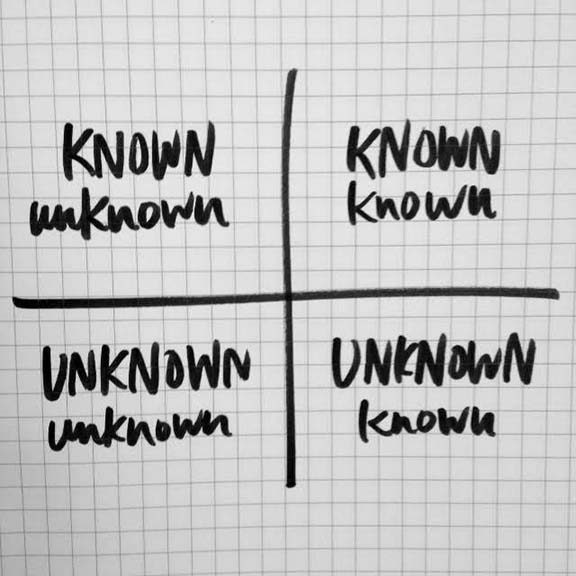
  • accept "I don't know"
  • "sometimes a rose can grow out of bullsh*t"
  • how can you find what you don't know...
  • the question is more important than the answer


Day 1 here.

DesignThinkers 2015, Day 1


1.1) James Victore
James Victore Inc., Brooklyn, NY
"Beauty and Magic"
  • always balancing the sacred and the profane
  • "we're living in the future"
  • check the url availability before naming your baby
  • 4 million years ago, apes climbed down trees, and decided to get inside a cave (to evade flying poo)
  • hand became most versatile tool: spoon, toilet paper, backpack, etc.
  • this "spoon" was the same for millions of years
  • spoon became "my spoon" - a totem/talisman - infused with energy, human emotion - CUSTOMIZED
  • tattooes = another form of customization
  • Maslow's hierarchy:
    • CREATIVITY - where beauty and magic begin
    • esteem
    • sex
    • shelter
    • food+water
  • can't have creativity without confidence
  • amazing things happen when you start thinking about the needs of others
  • if you don't have beauty and magic, you can stop your work. You're adding nothing.
  • we need more beauty and magic. We don't need more business.
  • creativity is dangerous - the people in power fear it
  • should be able say "I infused my coolness in _______."
  • "design like you give a damn"
  • "I want all of my work to be love notes." (referring to daily "coffee machine notes" with wife)
  • emoji - a new form of shorthand, language customized
    • a step backwards towards pictographs (history repeating)


1.2) Josh Clark
Big Medium, Brooklyn, NY
Author: Designing for Touch
"Magical UX and the Internet of Things" (slides here)
  • "no pain, no pain"
  • objectives:
    • to make designs physical
    • to change the way we interact with information
    • to move designs from screen to environment
    • to bridge the gap between the digital and the physical
    • take everyday technology and infuse it with imagination, wonder and delight
  • "any sufficiently advanced technology is indistinguishable from magic." -Arthur C. Clarke
  • goal of Alan Kay (1982): make the computer disappear from the environment
  • the smart phone is the first magic wand for everyone - brings computing power to immobile objects
  • problem: people spend an average of 3h16m on their phone - phone has wedged itself between humans; more connected, more disconnected
  • engagement was too easy, and now has become an Achilles heel
  • phones should caption lives, not frame them
  • key: interaction at the point of inspiration
  • screens are the just the medium of the moment - will not always be the case
  • automatic / "automagical" tech makes us weary, worried about the "how", who's in control, big data
  • magical tech is intentional - a human connection between devices; a graceful flow of info
  • real magic is about PEOPLE
  • don't just add data, add insight
  • it's up to us to challenge imagination
  • make technology that
    • bends to our lives
    • strengthens social connections
    • creates joy
    • empowers individuals
  • the magic problem: imagine the world, then make it a reality
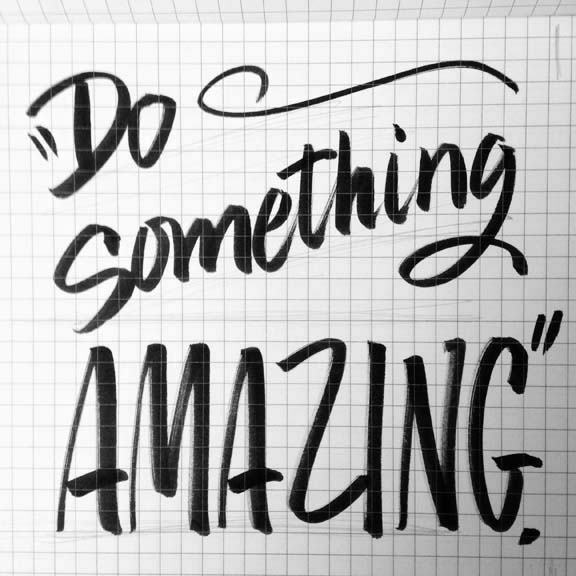
  • DO SOMETHING AMAZING!
demos/mentions:


1.3) Coralie Bickford-Smith
Penguin Books, UK
"Shelf Appeal: How Design is Helping Put Classics in the Hands of Readers
  • as a introvert, books become  best friend - "the most patient of teachers"
  • surrounded by books as a kid
  • in elementary school, won an award for "hard work and politeness"
  • inspired by William Blake, who wrote, illustrated, designed, printed and bound his books
  • attended Reading University - analyzed 200 covers of Robinson Crusoe
  • while working at a magazine, fighting over the placement of a cat graphic, asked herself "is this my life?" - decided to move on
  • took job at Penguin Books - started designing classics
  • challenge: books that get less marketing - need to grab attention on their own
  • "what can I bring to the party?"
  • with cloth bound covers ("new old"), wanted to explore book production, create books that people want to cherish and possess as physical items
  • challenges of foil: 
    • limited palette
    • some foils don't adhere to some cloths, and you don't know until you ry
  • spines are just as important as covers (perhaps more)
  • "I wanted to blow people's minds and create something of beauty."
  • with pattern design and use of icons, it entices those who know the symbology
  • drink coffee, panic, drink coffee, panic...
Editor: "Stop being so historically obsessive."
CBS: "No."
  • The Fox and the Star - new solo book about love, loss and learning to accept change
    • wrote, illustrated, designed
  • "failure is an option" - keep calm and carry on
  • "just draw and draw and draw..."
  • "the blank page is my nemesis"


1.4) Art Chantry
artchantry.com, Seattle, WA
"Art Speaks Posters Yell"

"stop faking design"
grunge poster design: "add boobs"
"grunge" was a marketing term used to sell punk rock to people who hated punk rock
"calling Rocky Horror sexist is like calling water wet"
take everything you know about graphic design and throw it away
teach yourself to work with nothing
universal language of design (line, colour, shape, text) - constantly evolving
graphic design is a powerful language - the power "to change people's minds"
"we're mind blowers"
graphic designers will do it for anyone who pays them (even Ronald Reagan...)
decided "I wasn't going to work for *ssholes"
become involved in community, started doing work that mattered
"want to do cool work? work for cool clients."
"sometimes, the only way to move forward is to take one step back first"
use your hands - engage in the process
drag the client into the work so that it becomes theirs too


1.5) Jean-François Porchez
Typofonderie, Paris
"Adding Value to the Invisibility of Typefaces"
  • typefaces often "invisible" - need to express language
  • make thought tangible
  • "type breathes voice"
  • "Fashion fades. Style is eternal." -Yves Saint Laurent
  • heritage - the importance of knowing what's come before
  • educate clients about type design
Projects shared:
  • Parisine
  • Geneo
  • Anisette
  • Retiro
  • Sephora Europe
  • Nespresso
  • Yves Saint Laurent
  • Galeries Lafayette


1.6) Annie Atkins
Graphic design for films, annieatkins.com
"The Secrets of Designing Worlds for Film"
  • designs any and all graphics which appear on camera - sets and props - notes, signage, patterns, newspapers, etc.
  • "don't like" doesn't mean "not good"
  • make it by hand if it was originally made by hand
  • temporal nature of props - several identical copies needed, sometime in "before" and "after"
  • take responsibility for details - imitate tactile world
  • small details seem unnecessary, but make all the difference for actors - create the experience
  • Fascist business cards - "Hitler was the fanciest Fascist."
Projects shared:
  • The Tudors
  • Box Trolls
  • Grand Budapest Hotel


1.7) Karim Rashid
Karim Design, New York, NY
"The Business of Beauty"
  • design is not well-defined
  • graphic design is the bridge between industry and human life
  • world started as a grid because it was easier to cut straight lines
  • we are having more informed experiences than ever before
  • old vs. new, analog vs. binary, material vs. immaterial
  • "bioneers of the digitial age"
  • trying to bring analog back into digital world
  • "I want to make a better world."
  • design is a creative act, a political act
  • obsessed with ovals - "corner represents an obstacle"
  • straight lines to not exist in nature – anywhere
  • nature is cruel, dangerous, dystopic (no order) - we want order
  • make world better, more beautiful, or don't bother.
  • we are hyperaware of our mortality in a digital age
  • "kitsch" is a cheap replica of the authentic; meaningless adornment
  • problem with humanity is the fear of everything - HAVE NO FEAR
  • as humans, we are original (fingerprints, iris) so we want to create something original
  • we are all born with the gene to create; therefore we are all creative
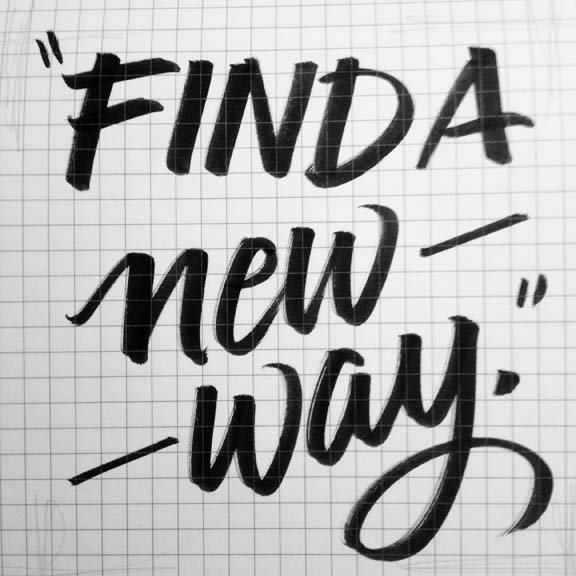
  • find a new way
  • the power to change the world is reliant on YOU
  • the most pivotal moments in history where changed by single people
  • the future is shaped by us, which is the purest form of democracy
  • digital age is actually humanizing us
  • what is luxury in the digital world? freedom.
  • make your hobby your job
  • eradicate banalities
  • don't die saying "I wasted my time"
  • time is limited - don't waste it, use it to shape a better world
  • act like you're not from this planet
  • any dreams can become reality


Day 2 here.

Design Thinkers 2014, Day 2


1) Richard Turley
Senior VP of Storytelling, MTV (previously: Bloomberg Businessweek)
"Let's Talk About Me"
  • "Typography can change the world!"
  • on bad clients: "the worse I made it, the more they liked it…"
  • while at Bloomberg Businessweek:
    • Helvetica – hating it and loving it at the same time
    • using – and breaking – the grid
    • constant state of reinvention – question everything
    • balance of serious and funny – can use this to manipulate readers and make them think differently


2) Steve Vranakis
Executive Creative Director, Creative Lab, Google
"Making Technology Matter, and Using Technology to Drive Creativity
  • "must be brave & kind" - listed in a Google Creative Labs job posting
  • make design matter
  • coding = a creative discipline
  • developers = artists
  • code / poetry = right words in the right order
  • break the conventions / structures
  • *importance of PLAY
  • on DevArt:
    • a global art show – all work created completely with code
    • inspiring the next generation of artists
  • DevArt participants:
    • Karsten Schmidt – outcome more important that authorship
    • Varvara + Mar – code is the soul of machines


3) Annette Diefenthaler, Ellen Lupton & Lawrence Zeegen
The Future of Design Education

Q1 What is the most important trait(s) for students leaving college / entering the workforce?
  • AD
    • one core skill more important than multiple - single skill permeates through portfolio
    • don't pretend you can do everything
  • LZ
    • not skill sets, but mindsets
    • must be able to embrace new thinking – looking for innovators who will push the industry forward
  • EL
    • don't duplicate / copy others
    • "nobody's going to be everything"
Q2 What is most important: critical thinking or technical skills?
  • EL
    • there should be no division – skill set and mindset should be integrated
  • AD
    • students must be adaptable and be able to teach themselves, or know how to acquire the skills they need
  • LZ
    • importance of learning both high tech and low tech (analog techniques), as well as learn from each other
Q3 How do you teach less-skilled students (the 90% "non-stars")?
  • LZ
    • educators are responsible for teaching the entire gamut of students, from all skill levels and backgrounds
    • strive for better, not best
  • AD
    • must question metrics – not just about graphic design "hard skills"
    • things to consider:
      • how is the student inspiring / challenging the discipline / industry?
      • how the student having an impact on his / her community?
      • how is the student able to communicate / inspire / teach others?
    • ultimately, educators must embrace diversity of skills and help break down barriers
Q4 Should software / technical skills be the core of design programs?
  • EL
    • critical thinking is more important that software knowledge
    • "teach spelling AND poetry in tandem" - always with an element of FUN
Q5 How important is coding fluency in a world where students are expected to be multi-disciplinary?
  • AD
  • students must have "digital fluency":
    • able to use but not necessarily produce
    • ability to tell stories with existing apps, platforms, tools of visual distribution
Q6 How do you teach students to be "resourceful"?
  • EL
    • make students work within constraints, units, specific parameters – teaches problem solving
    • resilience creates systems that can change
    • design is the most basic form of literacy for both designers and non-designers
    • empower students to do good - either at industry/agency level, or within their community
  • AD
    • time = money; make students execute projects in time constraints
    • find ways to "get to amazing" within 24 hours
    • ("or at least pretty amazing" - EL)
Q7 What are your thoughts on design departments who are changing the course descriptions from "Graphic Design" to "Communication Design"?
  • EL
    • "I will go to my grave as a graphic designer!"
    • "graphic design" connotes discipline, long standing traditions
    • "communication design" connotes business, marketing, PR (yuck)
  • LZ
    • "graphic design" doesn't adequately describe the tasks any more
Q8 What are the constraints of a 3-year design degree? What would you add/change?
  • LZ
    • too insular
    • gap between real money / real time
    • need to connect graphic design with everything else
  • EL
    • too much focus on self, homework, etc.
    • add communal spaces to create a studio experience, encourage peer-to-peer learning, which is invaluable
    • also, make all classes electives…
  • AD
    • most classroom spaces are terrible – feel too "school-like"
    • learning / working environments affect how we think, act, and the quality of our work


4) Ellen Lupton
Curator, Cooper-Hewitt National Design Museum + Director of Design MFA Program, MICA
"This is your Brain on Typography"

  • narrative storytelling plays a key part in experience design, product design & graphic design
  • story = "whole action of a certain magnitude" - Aristotle
  • narrative is satisfying
  • Vonnegat's story diagram of ecstasy & misery
  • design adds stories to life
  • effective, satisfying uses of narrative in humour:
    • misdirection / deception
    • rule of three
    • delayed answer
  • we crave conflict and the humour that and resolves it – catharsis + cathexis


5) Charles Adler
Co-founder, Kickstarter
"Stories from Vast Fields of Creative Independence"
  • 90s – art had been industrialized, industry was handcuffed by the mainstream
  • early 2000s – new power of the internet: to subvert industry
  • *rules were meant to be broken
  • rules are often temporary
  • it's okay to question everything
  • don't be afraid to ask WHY


6) Erik Spiekermann
Creative Director, Edenspiekermann
"Keeping the A**hole Factor Down
  • "I make sh*t"
  • poster: "Move fast and get sh*t done."
  • life's too short for kerning
  • get rid of redundancy!
  • on Helvetica: "nothing wrong with it, but nothing right with it either"
  • formula for how many books one needs: n+1
  • don't work WITH a**holes; don't work FOR a**holes
  • important to have an agile design process – be flexible


7) Jessica Walsh
Partner, Sagmeister & Walsh
"Creative Play"
  • "player" = a person who plays
  • work should be PLAY
  • contrary to the thought that play is wasteful, it actually:
    • prepares us
    • allows us to practice our skills
    • allows us to fail with fewer consequences
  • play shapes the brain
  • play is a state of mind
  • play deficit can be as detrimental as sleep deficit
  • play's "flow state" is the ideal state to innovate
  • Rules for play:
    • you must have confidence to FAIL
    • you must have dedicated, uninterrupted TIME
  • [quote from poster: "Not everything will be okay, but some things will."
  • play by your own rules
  • constraints are good for play
  • fight for what you believe in
  • *Sagmeister & Walsh only present one solution to clients - take it or leave it
  • *get off the computer and MAKE SH*T
  • do works that feeds your soul, not your ego
  • *acknowledge when work becomes a burden
  • "In the particular lies the universal." -James Joyce
  • re: pleasing everyone "if no one hates it, no one really likes it"
  • pay attention to what you like to do when no one is paying you
  • when in doubt, RISK IT
  • make less pretty crap, make more stuff with heart.


Day 1 here.

A huge thank you to Janine at Uppercase Magazine for this amazing opportunity, and to Design Thinkers for offering the press pass to this event. Thanks!

#rgddt

Design Thinkers 2014, Day 1


 I was honoured when Uppercase Magazine asked if I would like to attend RGD's annual Design Thinkers conference as their correspondent for the second year in a row.  As the Roving Reporter, I was able to soak in 13 incredible presentations by some of the world's most influential designers, typographers and innovators. It was two days full of invaluable insights, and I am excited to share all the notes & wisdom that inspired me.


DAY 1

1) Andrew Deitchmann
CEO & Co-founder, Mother NYC
"A Well-Designed Idea"
  • "have fun and make a living – in that order"
  • importance of convergence – keeping one's mind open
  • leaders need new skillets
  • ideas created by:
    • detectors – through purposeful exploration
    • alchemists – those who follow instincts
  • *PUSH THINGS FURTHER*
  • novelty is NOT sustainable
  • always work with good people
  • big ideas vs. rich ideas (rich is better)
  • "pragmagical"
  • on well-designed ideas:
    • highest common denominator
    • are culturally additive
    • authentic
    • flexible / iterative
    • not intimidated by the big players
  • *Make the complex simple & joyous!


2) Todd Waterbury
Executive Creative Director & Senior VP of Marketing, Target
"Belief to Behaviour"
  • language is what you believe
  • 21st century literacy = coding
  • diversity – best when one field of interest informs the other (and vice versa)
  • "Seeing is forgetting the name of the thing one sees." -Laurence Belcher
  • use skills to unlock new potential
  • discipline fuels the best creative thinking
  • *de-familiarize the ordinary
  • best ideas & experiences = the inevitable + the unexpected
  • "One sees great things from the valley, only small things from the peak." -G.K. Chesterton
  • best work rooted in empathy, broad thinking & making connections
  • on Brand:
    • belief --> behaviour
    • clarity of beliefs
    • the cumulative experience(s) of the client
    • both powerful & fragile
    • can be built, can be taken down
    • important to monitor changes & adapt
  • on Strategy:
    • comes from sacrifices & hard choices
    • rooted in courage, clarity & conviction
    • ability to say yes to one and no to ten others
  • *Choice is abundant, attention is scarce
  • owned media vs. earned media:
    • owned = topical & temporal
    • earned = presence with purpose
  • *ask yourself "What could it be?"
  • 5 principles at Target "goods doing good":
    • Emotional – open heart, open mind
    • Useful – challenge complexity, simplify the everyday
    • Democratic – intended for everyone
    • Insightful – details just as important as bigger picture
    • Purposeful – for the greater good

3) Sibylle Hagmann
Founder, Kontour type foundry
"Intrinsic Character"
  • interest in post-War Germany / GDR (German Democratic Republic) typography & typographers
  • importance of context – the role environment plays 
  • TypoArt (foundry):
    • influenced by this political / economic system
    • culturally unique context
    • limited materials of socialist system forced creatives to experiment (drawing, painting, calligraphy)
    • had to comply with socialist party
    • managed to preserve (and create) identity / cultural heritage


4) Aaron Draplin
Founder, Draplin Design Co.
"Tall Tales from a Large Man"
  • was told "you're not going to make a living in design"
  • "defy the f*cking odds"
  • interested in "creating things for regular people"
  • still surprised he "got away with it..."
  • "don't forget the power of your mouse finger" to help the community organizations
  • on success Field Notes: "You can do this."
  • design as trade, not trend
  • "quit ripping off Dan Cassaro" – create something NEW!
  • GET DIRTY!
  • go junking – inspiration waits in a world of "dead things"
  • on worrying: " Get cosmic." – think about the bigger picture and what's really important. At a universal scale, "we have no idea what's going on." Chill out.


5) Erik Spiekermann, Aaron Draplin & Richard Hunt
"The Future of Typography"
  • the best typography happens when craft meets intellect
  • "The only thing I know about the future is that it's ahead of us." - ES
  • typography has to live in different environments
  • "Type is visible language" - ES
  • learn, learn and keep learning
  • anything is possible...
  • in your design, give the same amount of attention to your typography as you do to your images – own every character
  • software is not going to do the work for you
  • priority: make it work (don't make it look cool)
  • if you need help, ASK (before you finish) – know who knows
  • *constraints are useful
  • find magic in mess – use something old to make something new
  • type should be type, lettering should be lettering
  • always think "what's the BEST way to do this?" and then do it!

6) Debbie Millman
President, Design Division, Sterling Brands, Design Matters podcast
"On Rejection, or How the Worst Moments of Your Life Can Turn Out to Be the Best"
  • *get past your fears and work through the discomfort
  • series of rejections, layoffs, setbacks, culminating in a slandering post on the Speak Up forum
  • took lemons and made lemonade - ended up writing for the forum
  • one closed door opens another – opportunity is everywhere
  • every time designers get together, there is opportunity to grow


7) Paula Scher
Partner, Pentagram
"All Design is Social"

*importance of PLAY


Day 2 here.

#rgddt